Ilute Solar: Zambia's merchant power breakthrough
For years, Zambia’s power sector has operated under heavily subsidised tariffs, with political pressure prioritising low electricity prices over cost recovery. As one developer warned: “The only thing worse than expensive power is no power” – a reality underscored when drought exposed the vulnerability of the country’s hydro-dependent system and load shedding intensified.

With rising renewable energy integration and growing cross-border power flows, African countries have increasingly turned to regional power markets to strengthen energy security and improve liquidity in electricity trading.
In Zambia’s case, the Southern African Power Pool (SAPP) comprises 12 SADC member states and acts as the region’s primary centralised mechanism for power trading, infrastructure development, interconnection and energy security. The pool operates a competitive multi-market platform and is expanding beyond national utilities to include independent power producers and energy aggregators.
One such aggregator is Africa GreenCo. Funded by Denmark’s Investment Fund for Developing Countries (IFU) and Private Infrastructure Development Group’s (PIDG) InfraCo Africa, the firm acts as an intermediary offtaker and service provider, purchasing power from IPPs and selling the electricity to utilities, private sector offtakers and into the SAPP market.
“Against the backdrop of the drought situation Zambia has suffered for the last few years, accelerating the deployment of solar generation to help the country diversify its energy mix is crucial,” said Cathy Oxby, co-founder and chief commercial officer at GreenCo. “State finances are constrained and therefore new structures are desperately needed to secure the required investment without burdening the sovereign balance sheet.”
It is within this framework that GreenCo procured the 32MWp Ilute Solar PV project in Zambia’s Sesheke District, the first private sector offtake PPA to be signed in the southern African country and one of the first projects to be project financed based on sales into SAPP.
Ilute has been tracked by IJGlobal for several years and recently reached financial close. In this study, IJ looks at the deal from conception to close and what it took to get the project over the line.
Project origins and development path
Lusaka-based renewable energy developer Western Power Company was the original pioneer behind the Ilute Solar project, first investigating the potential for a utility-scale solar investment in Zambia as early as 2015.

Following preliminary desktop assessment and site visits, the company identified the Sesheke area in Western Province as a highly favourable location due to its strong solar irradiation and proximity to existing transmission infrastructure. In May 2018, Western signed an MoU with the Sesheke District Council, securing access to land for further project development.
Ilute was initially submitted into Zambia’s GETFiT solar tender in late 2018, a government led-programme in partnership with German development bank KfW, designed to attract private investment for renewable energy projects. However, the project was not selected to proceed.
In March 2021, a new opportunity emerged when Africa GreenCo – through its subsidiary GreenCo Power Services – issued an RfQ for a 10-40MW solar PV IPP to supply electricity under a long-term power purchase model. The tendered tariff was structured around the SAPP day-ahead market price with a cap and a floor, designed to enable the project to take cushioned market price risk while also partially mitigating GreenCo’s exposure.
Phiri saw a clear attraction in this new model. “Our belief," he said, “was that African developers needed to be able to sell to the market to unlock bankability issues and to allow the private sector to move away from the old-fashioned need for sovereign guarantees and selling to state utilities. Working the numbers for SAPP – a very well-run market but with a shallow supply of electrons – was the relatively obvious answer.”
Recognising the scale and complexity of the opportunity, Western identified Kenyan-headquartered IPP Serengeti Energy as a strategic partner for Ilute. “With Serengeti Energy as our strategic partner, we were able to find a 'big brother' who was similarly aligned and a partner willing to treat us founders as equals in the development,” Phiri concluded.
For Serengeti Energy, Ilute strongly aligned with both its investment philosophy and long-term regional strategy. “Ilute represented a high-quality, bankable opportunity in a market with clear fundamentals,” says Christiaan Coetzee, Serengeti’s head of development.
“Strong solar resource, growing power demand, and a strategic location within SAPP. Zambia’s commitment to diversifying its generation mix away from hydropower – particularly in the context of increasing climate variability – made utility-scale solar an essential part of the country’s future energy system. Ilute offered the chance to deliver competitively priced, clean power while strengthening regional energy security.”
The 2 parties agreed to establish a special purpose vehicle (SPV), Ilute Solar Limited, to bid into the GreenCo process and were eventually selected in September 2021.
Over time, for structural and financing efficiency, Western Solar and its related individual shareholders consolidated their interests under Kwama Energy, which now participates as the local 30% shareholder alongside Serengeti’s 70%.
After several years of feasibility work and regulatory processes, a major milestone was reached in December 2023 at COP28 in Dubai, when Ilute Solar SPV signed a 25-year PPA with GreenCo. Under the agreement, GreenCo will offtake the power and trade it within the regional market, while ZESCO provides system operations and grid services.
The PPA was followed by a series of key project agreements, including:
- approval of the ESIA and issuance of the environmental permit
- signing of the grid connection agreement with ZESCO
- execution of the implementation agreement with the Government of Zambia
“The regulatory environment in Zambia has evolved significantly over the last few years and clearly recognises the role IPPs and traders play in the energy sector” GreenCo’s Oxby tells IJ.
“The Ilute project was, however, the catalyst for GreenCo agreeing terms with ZESCO in relation to system operations and use of system services (i.e. wheeling). We needed to be able to demonstrate to Ilute and its lenders that we had the ability, through ZESCO, to take the power from Ilute’s injection point and sell it on SAPP, in order to be able to generate the revenue needed to pay them for the power.
“In putting such first-of-a-kind arrangements in place, we were always conscious of ensuring a fair and equitable balance of risk and reward. Our agreements subsequently became the templates for future ZESCO arrangements with more recent market participants.”
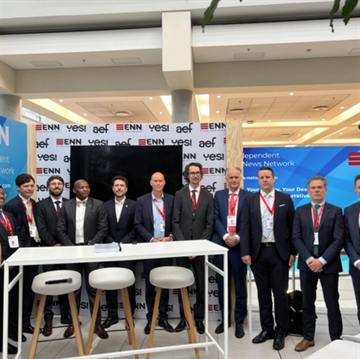
At the Africa Energy Forum in June 2025, Ilute Solar and its sponsors signed provisional financing documents with lenders including FMO, the African Development Bank (via SEFA), Triodos Investment Management and EDFI's Electrifi, securing a $26 million blended finance package.
Three months later in September, Serengeti Energy and Kwama Energy announced China Energy Engineering Group as the EPC contractor for the 32MWp solar PV plant, marking the final milestone before its December 2025 financial close.
Commenting on the journey to FC, Coetzee told IJ that the path was influenced by a “challenging macro and country-risk environment, the complexity of structuring one of the first bankable SAPP-linked PPAs with exposure to market price dynamics, and the need to align evolving systems and processes across multiple stakeholders, which affected timing.
“A key focus was ensuring that the tariff and revenue profile could support long-tenor DFI debt while maintaining sufficient liquidity and dependable debt service during periods of market stress.
“These challenges were addressed through conservative PPA and tariff structuring, rigorous downside and stress-case cash-flow modelling, and the inclusion of robust liquidity and reserve mechanisms. In parallel, enhanced coordination, governance, and decision-making processes helped streamline execution. Early and continuous engagement with DFIs, disciplined risk allocation, and strong sponsor commitment ultimately enabled financial close despite external headwinds,” he concluded.
Making merchant solar bankable
Ilute’s structure is designed to make a merchant market solar IPP bankable in a frontier market and show a strategy that can counter traditional models.
“The traditional PPA model in Africa is slow and constrained,” Sasha Nulliah, investment officer at mandated lead arranger FMO, tells IJGlobal. “SAPP-linked merchant power projects provide a viable alternative that unlocks projects more rapidly and reduces dependence on state utilities.
“Its blended-finance structure, anchored by FMO, mobilises DFI and commercial participation, and creates a scalable template for future deals.”
In this regard, around $26 million of non-recourse project financing was arranged across senior and subordinated debt tranches, weaving together commercial, development and concessional capital from:
- senior tranche – $19 million
- African Development Bank's Sustainable Energy Fund for Africa (Sefa), concessional – $7.9 million
- FMO – $7.3 million
- Triodos Investment Management – $3.8 million
- subordinated tranche – $7 million
- FMO via Access to Energy Fund – $3.5 million
- EDFI Management Company through ElectriFi – $3.5 million
The tenors of the senior and subordinated debt tranches are 18 years and 18.5 years, respectively. The subordinated tranche has a more flexible repayment schedule, thereby acting as a buffer for price fluctuations in the SAPP market – de-risking the senior tranche.
“Ilute provides several actionable lessons for renewable energy financing in Zambia and comparable frontier markets,” says Nulliah. “First, innovative finance solutions are necessary to accommodate merchant exposure and attract lenders.
"Second, early and active engagement with lenders helped ensure suitable market assumptions – critical for bankability.
"Third, projects depend heavily on credible regulatory frameworks, including open‑access rules, transparent settlement systems, and policy stability; without these, merchant models remain unbankable.
"Fourth, the presence of suitable intermediaries with strong credit enhancements reduces credit and liquidity risk.
"Fifth, robust ESG standards, such as Ilute’s ESAP and Biodiversity Management Plan, enhance lender confidence and facilitate approvals.”
Nulliah concludes: “DFIs will continue to play a catalytic role, particularly in absorbing early‑stage risk, until regional markets deepen sufficiently. These lessons establish a blueprint for future merchant market renewable energy projects across Southern Africa.”
On the equity side, Serengeti is expected to provide around $7.7 million, with Kwama covering the remaining $3.3 million. Climate and impact fund manager Camco provided financing through its renewable energy debt fund REPP 2 to Kwama Energy, supporting its equity coverage.
Commenting on the financing structure, Serengeti’s Coetzee told IJGlobal: “Collaboration with equity investors and DFIs was central to shaping a bankable and resilient project structure. Equity investors ensured strong project fundamentals and early alignment on risk and return expectations. DFIs played a critical de-risking role, driving robust ESG standards, conservative risk allocation, and mitigation of offtake, country, and currency risks, while providing long-tenor debt suited to the Zambian context.
“Together, this collaboration resulted in a well-balanced financing structure with clear risk ownership and strong contractual protections, enabling financial close and creating a replicable model for future renewable projects in the region.”
Cathy Oxby added: “Lenders are increasingly recognising that imposing rigid back-to-back structures between generation and consumption creates inefficiencies and stifles innovation and the ability to optimise supply and demand.
"The unmet power demands in the region are enormous, so by focusing on the fundamentals, projects such as Ilute demonstrate that merchant structures can be bankable without knowing on day 1 who the ultimate consumers of the power will be for the next 25 years. The significant liquidity support GreenCo provides substantially cushions any indirect impact on the project of market price volatility.
“As the regional markets become more liquid, this volatility will also reduce, enabling further efficiencies in project structuring and enabling us to support more new generation with the same balance sheet."
A replicable model for Africa
As developers pursue further renewable energy integration and African nations look to differing models to relieve strain on their own balance sheets, projects such as Ilute will become ever more important.
Traders will start to play a more crucial role, providing the “grease that keeps the wheels of the market turning”, as Sipho puts it. And once financiers see this as a viable offtake option, “the market will grow and the more generation directly available to power pools, the more people will use the power pools as they were designed, a marketplace to procure energy,” he concludes.
The model is also replicable across the region, with GreenCo currently being licenced in Zimbabwe, South Africa and Namibia, with expansion into the DRC underway. Creditworthy traders such as GreenCo play a key role in matching supply and demand across the region, balancing different technologies and collaborating with the host utilities to enable them to effectively monetise their assets and the services they provide.
What Ilute itself represents is a significant step in Zambia’s transition to a more diversified and resilient energy mix. By delivering competitively priced, utility-scale solar power, it helps reduce dependence on hydropower, strengthens grid stability, and contributes to regional energy trade through the SAPP.
Serengeti’s Coetzee concludes: “Ilute provides a replicable model for accelerating renewable energy development across Zambia and the wider region and – beyond energy supply – demonstrates how structured financing, strong risk allocation, and multi-stakeholder collaboration can make large-scale renewable projects bankable in emerging markets”.
Advisers
Advisers to sponsors:
- EY – financial
- Chibesakunda & Co – legal
- Armitage Environmental Consulting – E&S
- Wood – technical
- TNEI consulting – technical
Advisers to lenders:
- Deloitte – tax and model auditor
- Hogan Lovells – legal
- AB & David Zambia – legal (local)
- DNV – technical
- Haskoning – technical
- Indecs – insurance
- African Power Ventures – SAPP adviser
Adviser to Camco:
- Burges Salmon – legal
Image 1: Africa GreenCo team
Image 2: Serengeti implementation agreement signing
Image 3: Ilute Solar sign financing
Request a Demo
Interested in IJGlobal? Request a demo to discuss a trial with a member of our team. Talk to the team to explore the value of our asset and transaction databases, our market-leading news, league tables and much more.